 Authenticity Guaranteed — 100% Original Fragrances
 Free 5ml Tester with Every Order
 Cash on Delivery Available
 Pay with Tabby — Split in 4, Interest Free
 Pay with Tamara — Buy Now, Pay Later
 Luxury Fragrances Starting from AED 99
 Enjoy Free Delivery Anywhere in the UAE
 Exclusive Arabic Oud & Oriental Blends
 Gift Wrapping Available on All Orders
 New Launches Every Month — Stay Tuned
 Loved by 10,000+ Customers Across the UAE
 Same Day Dispatch on Orders Before 3PM
 Easy 7-Days Returns — Shop with Confidence


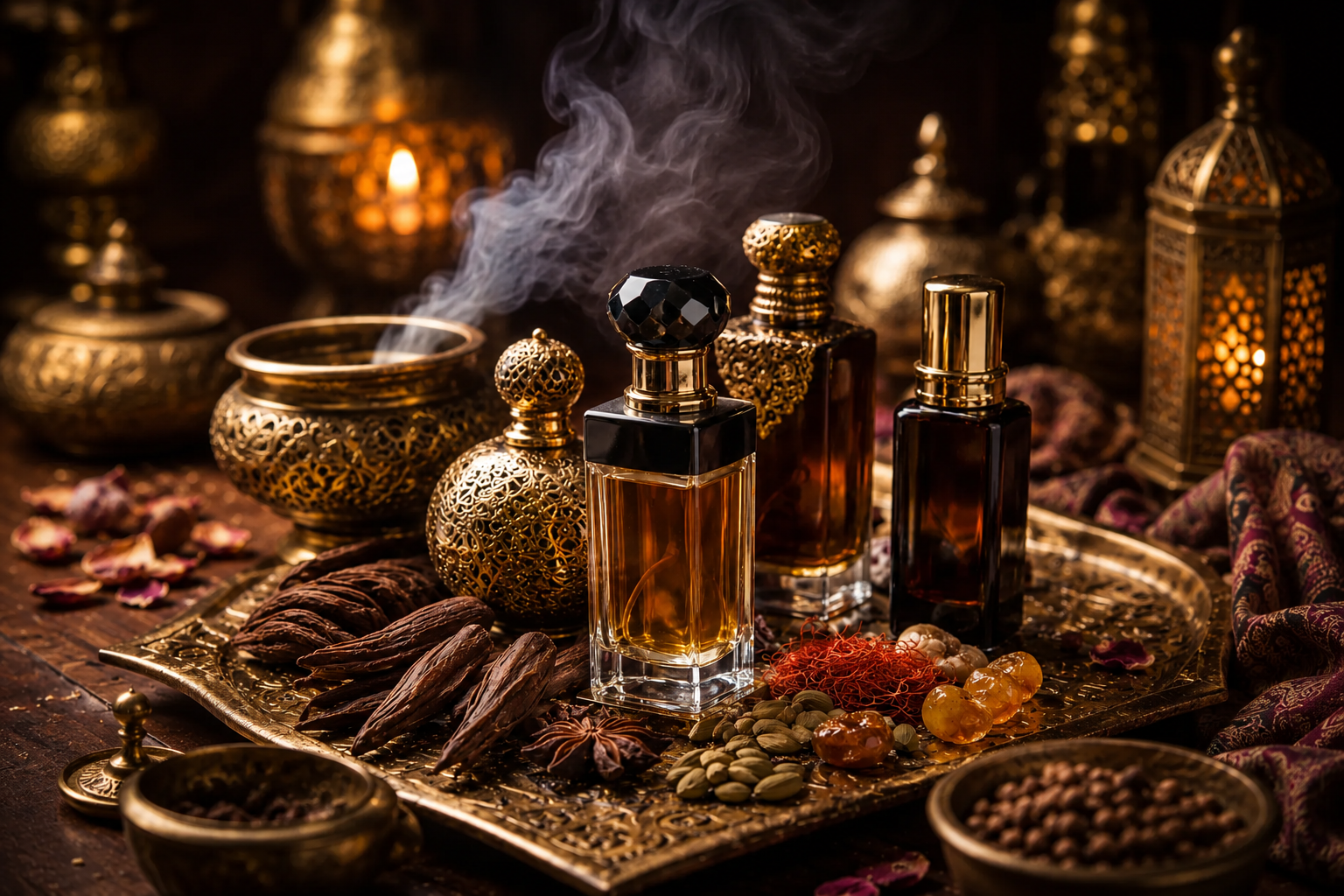
For the longest time, buying cologne was literally a ten minute job for me. Walk in, spray a few testers on those little paper strips, pick whatever smells decent, and leave. I did that same routine for years without ever stopping to think whether something better was out there. I had my usual rotation of three or four safe options and just stuck with them because honestly they worked well enough and I never had a reason to look elsewhere.
Then one evening at a dinner, a friend walked in wearing something I couldn't quite place. It didn't smell like cologne. Not in the usual sense anyway. It smelled like something deeper and older and completely unlike anything I'd come across before. I leaned over mid conversation and asked what he was wearing. He smiled like he'd been waiting for someone to ask. Arabic perfume. Oud based. Small brand, nothing you'd ever find sitting behind a mall counter.
I went home and ordered a bottle that same night mostly out of curiosity. And that one decision genuinely rewired how I think about fragrance altogether.
Once You Actually Pay Attention, You Can't Stop
The honest problem with most mainstream colognes and I say this having worn plenty of them over the years is how similar they all are once you really start paying attention. Fresh and clean. Woody and safe. Sporty and completely forgettable by noon. The big fragrance brands spent decades figuring out what bothers the fewest people and then just keep producing that same formula with slightly different packaging and a new celebrity face every couple of years.
Arabic perfume never really followed that logic. These scents weren't designed around mass appeal or whatever a focus group decided was safe. They were built around craft, genuinely rare ingredients, and traditions that honestly go back centuries. Nobody sat in a boardroom deciding what demographic to target. The goal was just to make something worth actually wearing.
That difference hits you the second you put one on your skin.
Oud Is Something Else Entirely
If you've never come across oud before it genuinely deserves a proper explanation because nothing really prepares you for it the first time.
Oud comes from agarwood a tree that produces this dark fragrant resin when it's fighting off a specific kind of infection. Not every tree produces it and the conditions have to line up just right. The harvesting is slow, the processing is careful, and real high grade oud ends up being one of the most expensive raw materials in the entire fragrance world. Some of it genuinely costs more per gram than gold.
The smell is hard to put into words properly. Smoky but not in a harsh way. Sweet but nothing like fruit or sugar. Warm in a way that feels almost physical like it's coming from inside the skin rather than just sitting on the surface. First time you smell real oud it doesn't register as cologne at all. It registers as something heavier and more serious and a lot harder to forget.
Men who discover it usually find that other fragrances start feeling a bit thin and flat by comparison. That's not an exaggeration either. It permanently shifts what you expect.
The People Behind These Know Their Craft
Something worth understanding about Arabic perfume is that the actual craft behind it is real in a way that's become pretty rare these days.
The perfumers making these blends aren't working from some formula that got approved by a marketing team last Tuesday. They're working from years sometimes entire lifetimes of hands on experience with raw materials that most Western perfumers barely ever touch. They understand how different ingredients behave together, how a scent evolves over hours on skin, how heat and humidity change the way something projects off your body. That kind of knowledge builds slowly and there's genuinely no shortcut to it.
What you notice when you wear the result is something that feels alive. Layers that shift and develop. An opening that transforms into something completely different an hour later. That evolution isn't accidental. Someone made very deliberate decisions to create that arc and those decisions came from real experience rather than a brand brief.
The Practical Stuff That Actually Convinces People
Longevity is what comes up every single time someone talks about making this switch. These scents last in a way that mainstream colognes honestly don't. A couple of small dabs in the morning and you're still catching something warm and rich well into the evening. Finding traces on your shirt the next morning isn't even unusual. For men who are genuinely tired of reapplying halfway through the afternoon, that alone is enough reason to try something different.
Projection is different too. A good Arabic Perfume has this presence that travels with you without being aggressive or suffocating. People nearby notice without you having drowned yourself in the stuff. That balance is harder to get right than it sounds and most commercial colognes either project too faintly or completely overdo it.
And the ingredients themselves are a big part of what you're paying for. Real rose oil instead of a synthetic version. Actual amber and saffron and musk rather than lab made alternatives. These materials are genuinely expensive and take real effort to source consistently, and that shows up directly in how the finished scent behaves on skin.
Questions People Always Ask
Never tried Arabic perfume before — where do I start?
Start with something oud based but not too heavy. There are plenty of blends that pair oud with lighter notes like citrus or rose that make it easier to ease into without feeling overwhelmed. Don't jump straight to the most intense smoky option available on your first go.
How much should I actually apply?
Way less than you think. Two small dabs — wrist and neck — is genuinely enough for a full day. These are concentrated and applying them like a regular cologne will clear a room fast. Learn that early and save yourself some awkward moments.
Everyday wear or special occasions only?
Honestly both. Some blends are heavy and intense and clearly made for evenings out. But there's a solid range of lighter options built specifically for daily wear. Either way the longevity means you're not thinking about reapplying at lunch.
Does weather change how they smell?
Noticeably yes. Heat opens these up — they project more and develop faster in warm weather. In cooler months they stay closer to the skin and feel softer. Both are genuinely great experiences just different.
Good as gifts?
Some of the best fragrance gifts you can give honestly. The packaging on most Arabic perfume brands is beautiful and thoughtful so the presentation alone makes an impression before anything is even opened. Add a scent that's distinctive and long lasting and you've got something that feels genuinely considered.
Why do they cost more than regular cologne?
Because what's inside actually costs more. Real oud, genuine rose oil, actual amber and saffron — sourcing these materials consistently takes years of relationships and real money. You're paying for the ingredients not the advertising campaign.


